In today’s fast-paced world, stress has become an inescapable part of life. Whether it’s work pressures, financial worries, relationship issues, or health concerns, chronic stress can take a toll on your mental, emotional, and physical well-being. While there are many ways to manage stress—from therapy to medication—yoga stands out as a natural, holistic, and highly effective solution.
But how exactly does yoga help with stress management? What scientific principles make it so powerful? And how can you incorporate yoga into your daily routine to reduce stress and find inner peace?
In this comprehensive guide, we’ll explore:
- The science behind yoga and stress relief
- How yoga reduces stress at the physical, mental, and emotional levels
- Best yoga poses, breathing techniques, and meditation practices for stress management
- **Why Rishikesh—and 8 Limbs Yoga School—**is the perfect place to learn yoga for stress relief
By the end of this article, you’ll have a clear understanding of how yoga can transform your relationship with stress and improve your overall well-being.
The Science Behind Yoga and Stress Management
To understand how yoga helps with stress, we need to look at the science of stress and how yoga interacts with the body and mind.
The Stress Response: Fight or Flight
When you encounter a stressful situation, your body triggers the “fight or flight” response, a primitive survival mechanism that prepares you to either confront or escape the threat. This response is mediated by the sympathetic nervous system, which releases stress hormones like cortisol and adrenaline.
While this response is useful in short bursts, chronic stress keeps your body in a constant state of alert, leading to:
- Increased heart rate and blood pressure
- Weakened immune system
- Digestive issues
- Anxiety and depression
- Fatigue and burnout
How Yoga Counters Stress: The Relaxation Response
Yoga activates the parasympathetic nervous system, which is responsible for the “rest and digest” response. This counters the effects of the fight or flight response by:
- Lowering cortisol levels (the primary stress hormone)
- Reducing heart rate and blood pressure
- Improving digestion and metabolism
- Enhancing immune function
- Promoting relaxation and mental clarity
The Role of the Vagus Nerve
The vagus nerve is a key component of the parasympathetic nervous system. It connects the brain to the body and plays a crucial role in regulating stress. Yoga—especially deep breathing, meditation, and gentle movements—stimulates the vagus nerve, which:
- Calms the mind
- Reduces inflammation
- Improves emotional resilience
Yoga and the Brain: Neuroplasticity
Yoga also positively impacts the brain by promoting neuroplasticity—the brain’s ability to rewire itself in response to new experiences. Studies show that yoga:
- Increases gray matter in areas of the brain associated with emotional regulation and stress resilience (e.g., the prefrontal cortex and hippocampus).
- Reduces activity in the amygdala, the brain’s fear center, which is hyperactive in people with chronic stress and anxiety.
- Boosts levels of GABA (gamma-aminobutyric acid), a neurotransmitter that calms the nervous system.
How Yoga Reduces Stress: Physical, Mental, and Emotional Benefits
Yoga is a multidimensional practice that addresses stress on multiple levels. Here’s how it works:
1. Physical Benefits of Yoga for Stress Management
a. Releases Muscle Tension
Stress often manifests as physical tension in the body, particularly in the neck, shoulders, and back. Yoga stretches and relaxes these muscles, releasing built-up tension and improving circulation.
Best Poses for Releasing Tension:
- Child’s Pose (Balasana): Gently stretches the back, shoulders, and hips.
- Cat-Cow Stretch (Marjaryasana-Bitilasana): Releases tension in the spine and neck.
- Downward-Facing Dog (Adho Mukha Svanasana): Lengthens the spine and hamstrings, relieving back and shoulder tension.
b. Lowers Blood Pressure and Heart Rate
Yoga improves cardiovascular health by reducing blood pressure and slowing the heart rate. This counteracts the effects of chronic stress on the heart and blood vessels.
Best Poses for Cardiovascular Health:
- Legs-Up-the-Wall Pose (Viparita Karani): Promotes relaxation and improves circulation.
- Corpse Pose (Savasana): Encourages deep relaxation and lowers heart rate.
c. Boosts Immune Function
Chronic stress weakens the immune system, making you more susceptible to illnesses. Yoga strengthens immunity by:
- Reducing inflammation
- Improving lymphatic drainage
- Balancing the nervous system
Best Poses for Immunity:
- Cobra Pose (Bhujangasana): Stimulates the thymus gland, which plays a key role in immune function.
- Bridge Pose (Setu Bandhasana): Opens the chest and improves respiratory health.
2. Mental Benefits of Yoga for Stress Management
a. Calms the Mind
Yoga teaches you to focus on the present moment, which reduces mental chatter and anxiety. The combination of movement, breath, and meditation helps quiet the mind and bring clarity.
Best Practices for Mental Calm:
- Mindful Breathing: Focus on slow, deep breaths to anchor your mind in the present.
- Meditation: Even 5–10 minutes of daily meditation can significantly reduce stress and anxiety.
b. Improves Focus and Concentration
Stress scatters your attention and makes it hard to focus. Yoga trains your brain to stay present and concentrated, which enhances productivity and mental clarity.
Best Practices for Focus:
- Single-Pointed Focus (Dharana): Concentrate on a single object, sound, or breath to sharpen your mind.
- Yoga Nidra: A guided relaxation practice that deeply relaxes the mind while maintaining awareness.
c. Reduces Anxiety and Depression
Yoga has been scientifically proven to reduce symptoms of anxiety and depression by:
- Increasing serotonin levels (the “feel-good” neurotransmitter)
- Reducing cortisol levels
- Promoting a sense of inner peace and well-being
Best Practices for Anxiety and Depression:
- Alternate Nostril Breathing (Nadi Shodhana): Balances the left and right hemispheres of the brain, reducing anxiety and stress.
- Legs-Up-the-Wall Pose (Viparita Karani): A restorative pose that calms the nervous system and relieves anxiety.

3. Emotional Benefits of Yoga for Stress Management
a. Encourages Emotional Release
Stress and unresolved emotions often get stored in the body as tension or blockages. Yoga helps release these emotions through:
- Physical movement (e.g., hip openers like Pigeon Pose)
- Breathwork (e.g., Breath of Fire to release pent-up energy)
- Meditation (e.g., Loving-Kindness Meditation to cultivate self-compassion)
Best Poses for Emotional Release:
- Pigeon Pose (Eka Pada Rajakapotasana): Opens the hips, where emotions like fear and sadness are often stored.
- Seated Forward Bend (Paschimottanasana): Releases tension in the back and hamstrings, which can hold emotional stress.
b. Cultivates Self-Awareness
Yoga encourages self-reflection and mindfulness, helping you recognize and manage stress triggers more effectively. By tuning into your body and breath, you develop a deeper understanding of your emotional patterns.
Best Practices for Self-Awareness:
- Journaling: Write down your thoughts and feelings after yoga to track your emotional progress.
- Body Scan Meditation: Mentally scan your body for tension or discomfort and release it with breath.
c. Promotes a Sense of Inner Peace
One of the greatest gifts of yoga is the sense of inner peace it cultivates. By connecting with your breath and body, you learn to let go of stress and find stillness within.
Best Practices for Inner Peace:
- Savasana (Corpse Pose): A deep relaxation pose that integrates the benefits of your practice.
- Gratitude Meditation: Focus on things you’re grateful for to shift your mindset from stress to contentment.
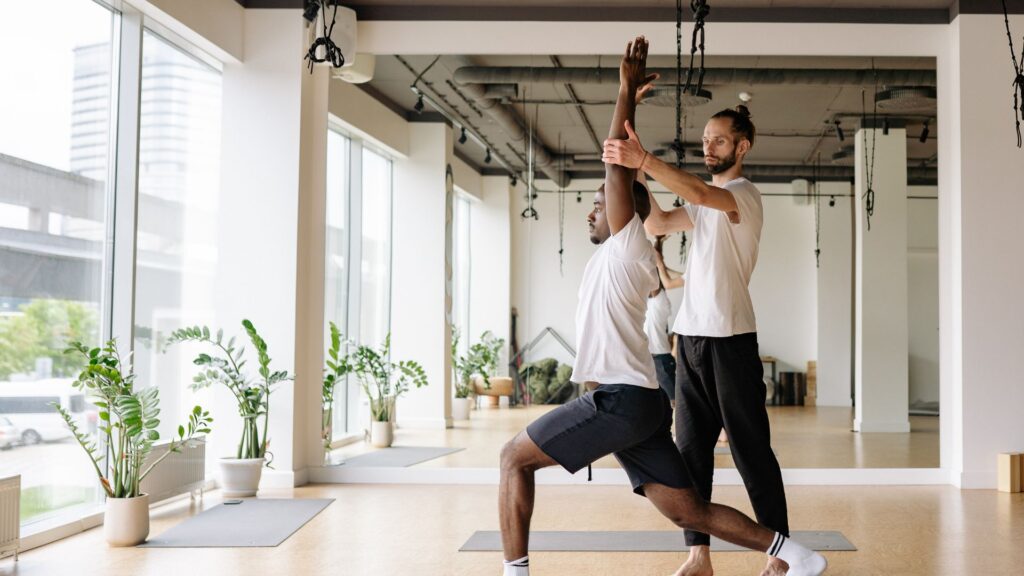
Best Yoga Practices for Stress Management
Now that you understand how yoga helps with stress, here are the best practices to incorporate into your routine:
1. Yoga Poses (Asanas) for Stress Relief
These gentle and restorative poses are perfect for melting away stress:
| Pose | Benefits | How to Do It |
|---|---|---|
| Child’s Pose (Balasana) | Calms the mind, relieves tension in the back and shoulders. | Kneel on the floor, sit back on your heels, and stretch your arms forward. |
| Legs-Up-the-Wall (Viparita Karani) | Reduces anxiety, improves circulation, and promotes relaxation. | Lie on your back with your legs extended up a wall. |
| Cat-Cow Stretch (Marjaryasana-Bitilasana) | Releases tension in the spine and neck. | Alternate between arching your back (Cow) and rounding it (Cat). |
| Downward-Facing Dog (Adho Mukha Svanasana) | Lengthens the spine, relieves back and shoulder tension. | From a plank position, lift your hips up and back, forming an inverted V. |
| Corpse Pose (Savasana) | Deep relaxation, lowers heart rate, and integrates the benefits of yoga. | Lie flat on your back with your arms and legs relaxed. |
| Seated Forward Bend (Paschimottanasana) | Releases tension in the back and hamstrings, calms the mind. | Sit with your legs extended and fold forward from the hips. |
2. Breathing Techniques (Pranayama) for Stress Relief
Breath is the most powerful tool for managing stress. Here are the best pranayama techniques for instant calm:
| Technique | Benefits | How to Do It |
|---|---|---|
| Deep Belly Breathing | Activates the parasympathetic nervous system, reduces cortisol. | Inhale deeply through the nose, filling the belly. Exhale slowly. |
| Alternate Nostril Breathing (Nadi Shodhana) | Balances the brain, reduces anxiety, and improves focus. | Close your right nostril, inhale through the left. Switch and exhale through the right. Repeat. |
| 4-7-8 Breathing | Calms the nervous system, reduces heart rate. | Inhale for 4 seconds, hold for 7, exhale for 8. Repeat 4 times. |
| Breath of Fire (Kapalabhati) | Energizes the body, releases toxins, and reduces stress. | Rapid, forceful exhales through the nose while pumping the belly. |
3. Meditation Practices for Stress Relief
Meditation is a powerful way to train your mind to stay calm and centered. Here are some simple yet effective techniques:
| Technique | Benefits | How to Do It |
|---|---|---|
| Mindfulness Meditation | Reduces stress, improves focus, and cultivates present-moment awareness. | Sit quietly and observe your breath, thoughts, and sensations without judgment. |
| Loving-Kindness Meditation (Metta) | Cultivates compassion, reduces negative emotions. | Repeat phrases like “May I be happy, may I be healthy, may I be at peace.” |
| Body Scan Meditation | Releases physical tension, promotes relaxation. | Mentally scan your body from head to toe, releasing tension with each exhale. |
| Mantra Meditation | Calms the mind, deepens focus, and connects you to a higher state. | Repeat a mantra like “Om” or “So Hum” (I am that) silently or aloud. |
Why Practice Yoga for Stress Management in Rishikesh?
While you can practice yoga anywhere, Rishikesh—the Yoga Capital of the World—offers a unique and transformative experience for stress relief. Here’s why:
1. Sacred and Peaceful Environment
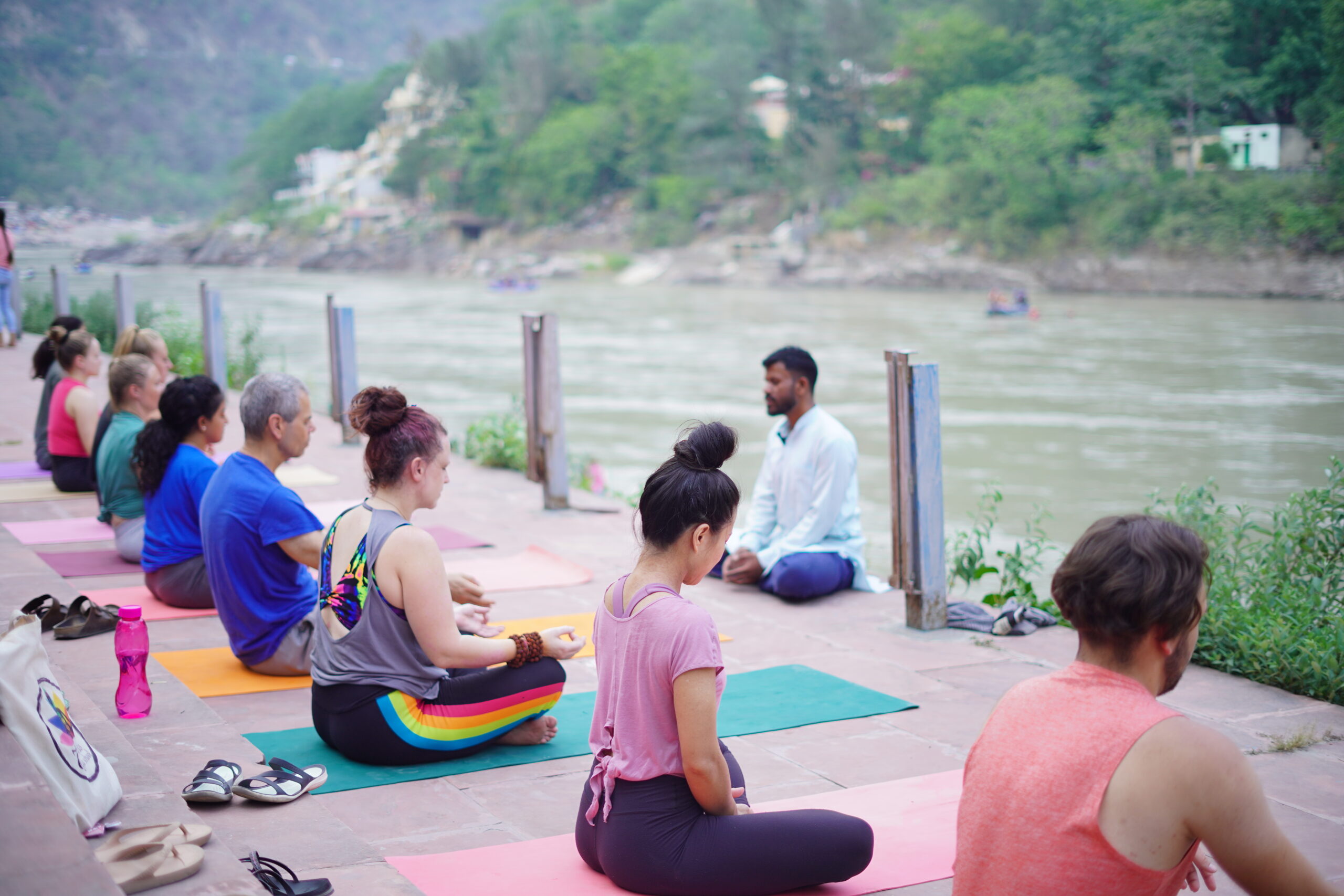
Rishikesh is nested in the Himalayan foothills and cradled by the Ganges River, creating a serene and spiritually charged atmosphere. The natural beauty and sacred energy of Rishikesh enhance the benefits of yoga, making it easier to relax and let go of stress.
2. Authentic Yoga Traditions
Rishikesh is the birthplace of yoga, and its ashramas and yoga schools preserve ancient yogic traditions. Here, you’ll learn authentic yoga techniques that have been passed down for generations.
3. Experienced and Knowledgeable Teachers
The yoga teachers in Rishikesh are highly trained and experienced in using yoga for stress management. They can guide you through personalized practices tailored to your unique needs.
4. Holistic Wellness Approach
Many yoga schools in Rishikesh, including 8 Limbs Yoga School, offer a holistic approach to stress management that includes:
- Yoga asanas (postures)
- Pranayama (breathwork)
- Meditation
- Ayurveda (ancient Indian medicine)
- Yoga philosophy and mindfulness
This integrated approach ensures you address stress on all levels—physical, mental, and emotional.
5. Community and Support
Practicing yoga in Rishikesh allows you to connect with a community of like-minded individuals who are also seeking stress relief and inner peace. This sense of belonging can amplify the benefits of your practice.
How 8 Limbs Yoga School Can Help You Manage Stress
At 8 Limbs Yoga School, we specialize in using yoga as a tool for stress management. Our experienced teachers and holistic approach ensure that you not only learn yoga techniques but also integrate them into your daily life for lasting stress relief.
1. Stress-Relief Focused Yoga Classes
Our yoga classes are designed to help you unwind and de-stress. We focus on:
- Gentle and restorative asanas to release tension
- Breathwork (pranayama) to calm the nervous system
- Guided meditation to quiet the mind
2. Yoga Teacher Training for Stress Management
If you want to deep dive into yoga for stress relief, our 200-hour, 300-hour, and 500-hour Yoga Teacher Training programs include specialized modules on:
- Yoga for anxiety and depression
- Restorative yoga
- Yin yoga
- Meditation and mindfulness
These programs equip you with the tools to manage your own stress and help others do the same.
3. Retreats and Workshops
We offer stress-relief retreats and workshops that combine:
- Daily yoga and meditation sessions
- Ayurvedic treatments (e.g., massages, herbal therapies)
- Nature walks and Ganga Aarti (rituals by the river)
- Healthy, sattvic (pure) meals to nourish your body and mind
These immersive experiences provide a complete reset for your nervous system.
4. Personalized Guidance
Our teachers take the time to understand your unique needs and tailor practices to help you manage stress effectively. Whether you’re a beginner or an advanced practitioner, we’ll guide you every step of the way.
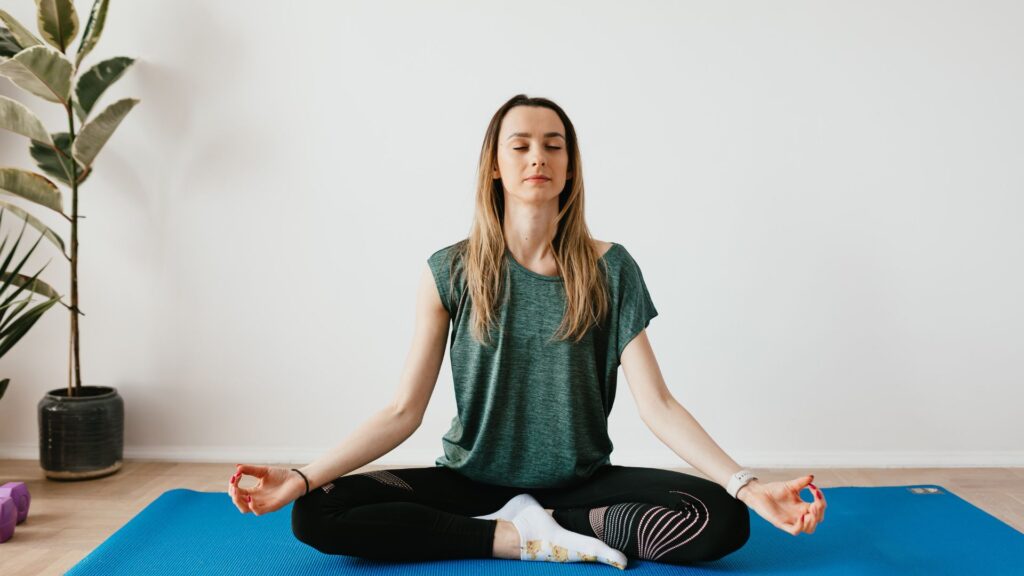
Conclusion: Start Your Stress-Relief Journey with Yoga
Stress is an inevitable part of life, but it doesn’t have to control your well-being. Yoga offers a natural, holistic, and powerful way to manage stress, calm your mind, and restore balance to your life.
Whether you’re new to yoga or a seasoned practitioner, incorporating yoga into your routine can transform your relationship with stress. And if you’re looking for the perfect place to deep dive into yoga for stress relief, **Rishikesh—and 8 Limbs Yoga School—**is the ideal destination.
🔗 Join Us for a yoga class, workshop, or teacher training program and start your journey toward a stress-free, balanced, and peaceful life!
Leave a Reply