Special fees available on our 200, 300 and 500 hour Yoga Teacher Training courses.
Ashtanga Vinyasa Yoga Guide
Ashtanga Vinyasa Primary Series: A Beginner’s Guide to Layout, Sequencing & Safety
Stepping onto the mat for the first time for a yoga teacher training course can feel intimidating. Learn how the Ashtanga Primary Series works as a dynamic healing practice, complete with sequence breakdowns, safe prop modifications, and insights from traditional yoga schools.
ABy Yogi Ankit Joshi••Calculating...
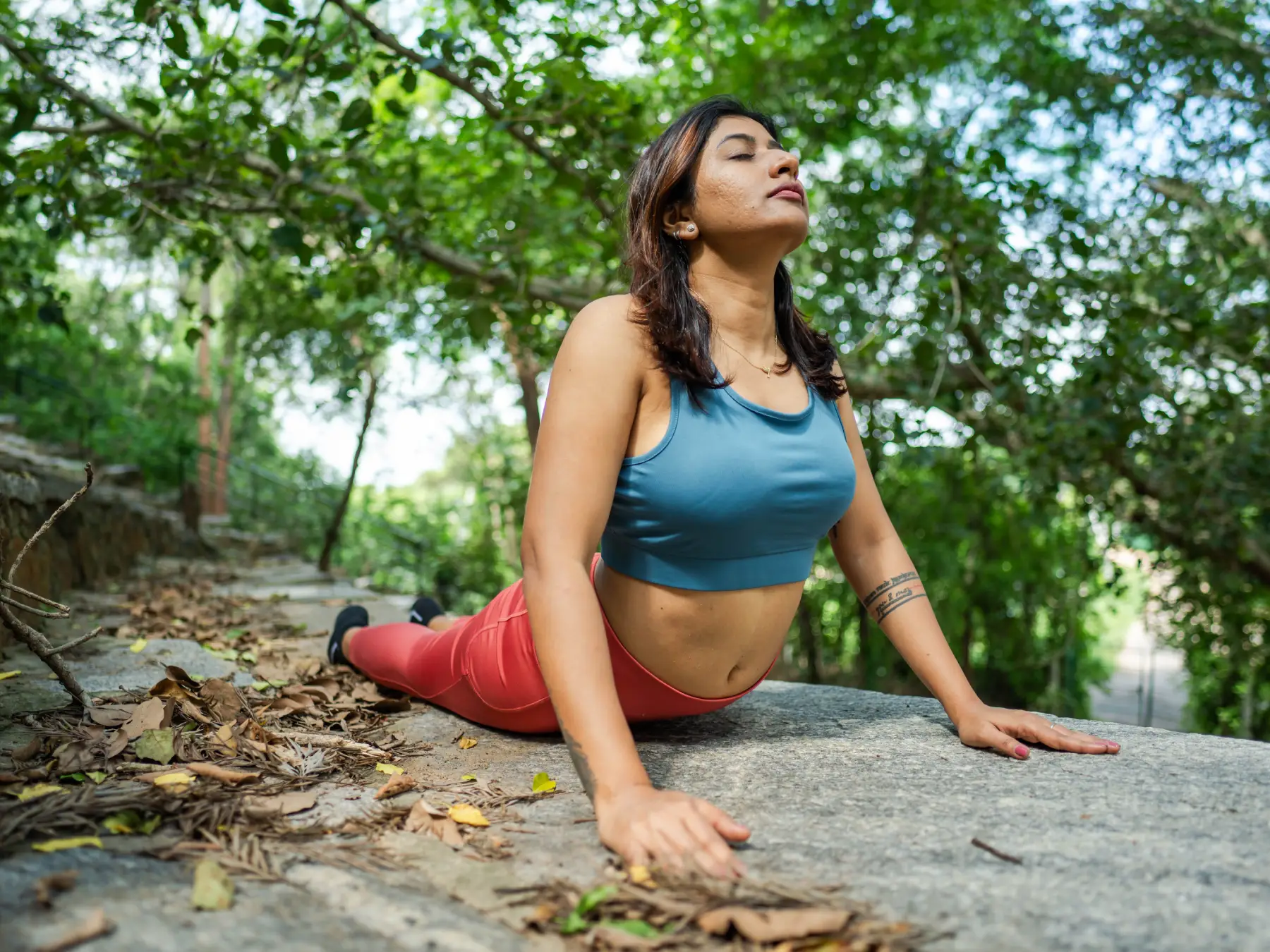
A mindful approach to posture, alignment, and breath forms the foundation of a safe Ashtanga Vinyasa practice.
To a beginner watching from the outside, the Ashtanga Vinyasa Primary Series can easily appear athletic, intimidating, and overly rigid. However, traditional yogic science views this foundational practice as Yoga Chikitsa (Yoga Therapy) - a systematic recalibration process designed to clear metabolic impurities, align the spine, and restore balanced digestive fire before ever attempting the advanced postures of the Ashtanga Vinyasa Second Series (Intermediate Series).
Every posture in the primary sequence relies on the foundational triad of Tristana - audible Ujjayi breath to build internal heat, energetic bandhas (Mula and Uddiyana) to stabilize the spine, and specific gazing points (Drishti) to tether mental focus inward. Rooted in traditional lineage practice, this systematic layout helps practitioners build a sustainable daily routine.
FOUNDATION & PHILOSOPHY
Demystifying Yoga Chikitsa (Yoga Therapy)
If you step into a traditional Ashtanga yog class early in the morning, the atmosphere hits you immediately. The air is quiet except for the collective sound of deep Ujjayi breathing, the room hums with focused discipline, and practitioners move through a rigid, unyielding sequence of postures. From the outside, the Ashtanga Vinyasa Primary Series can easily look like an intimidating, athletic performance designed only for the naturally flexible.
However, traditional yogic science views this foundational practice through an entirely different lens. In Sanskrit, the Primary Series is formally called Yoga Chikitsa, which translates directly to Yoga Therapy. It was never intended as an ego driven display of physical advanced poses. Instead, it serves as a systematic recalibration process cleansing metabolic impurities, realigning the spine, and resetting an overworked nervous system.
Rather than chasing complex postures found in the Ashtanga Vinyasa Intermediate Series (also known as the Ashtanga Vinyasa Second Series), this foundational blueprint treats the body as an interconnected system. Before attempting intense physical demands, Yoga Chikitsa establishes internal heat, opens tight connective tissue, and grounds mental attention. When approached as a healing framework rather than a workout, the sequence becomes accessible, therapeutic, and deeply transformative for every practitioner.
SEQUENCE & ARCHITECTURE
The Architecture of the Primary Series - Layout & Sequencing
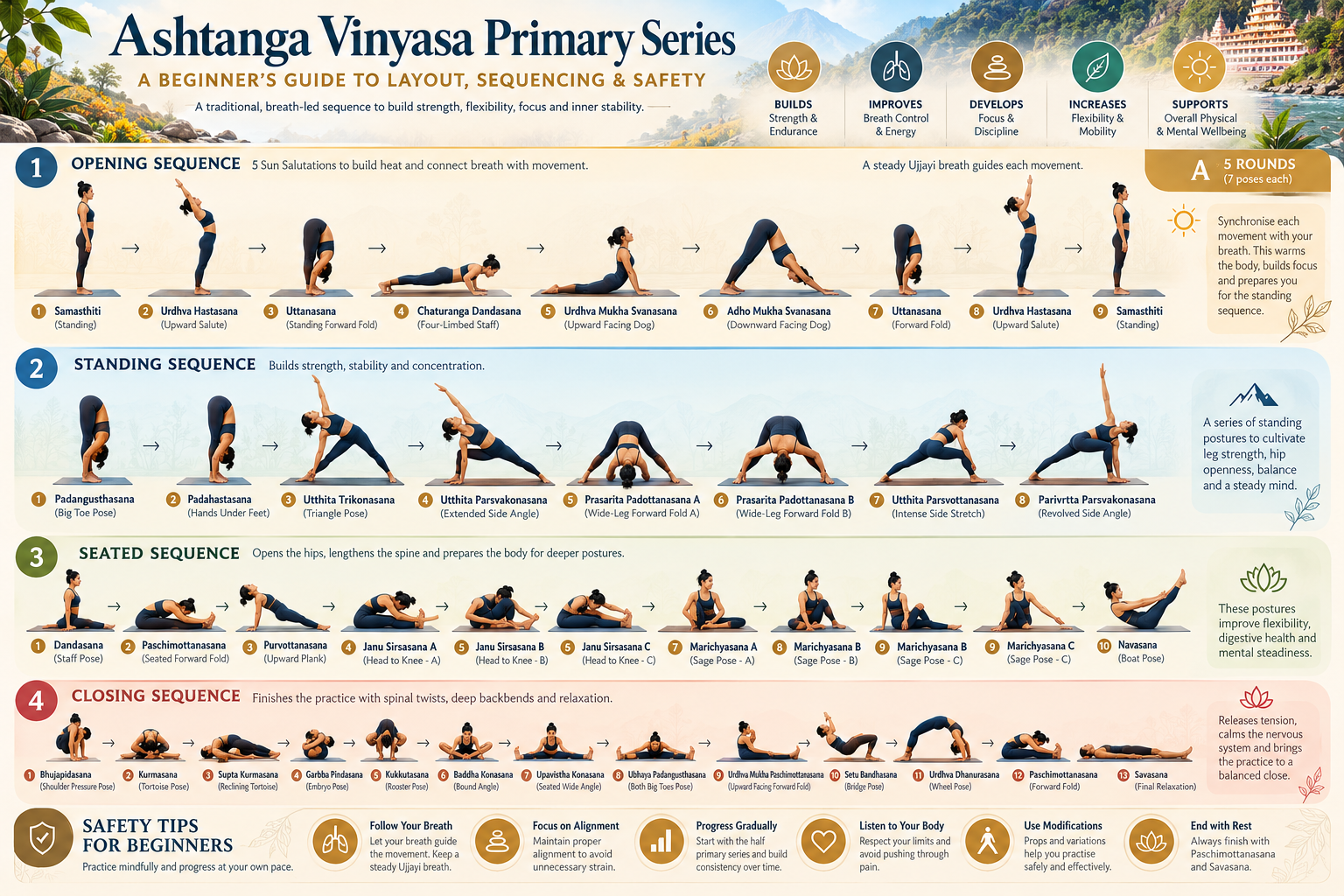
The Ashtanga Vinyasa Primary Series is not a random collection of yoga poses but an intelligent, highly structured architectural blueprint. Each phase builds upon the previous one, gradually heating the body, opening stubborn connective tissue, and systematically cooling down the nervous system. Understanding this logical progression shifts your practice from memorizing shapes to experiencing a continuous, fluid meditation.
Phase 1: Heat & Opening (Surya Namaskara A & B)
The practice opens with Surya Namaskara (Sun Salutations A and B), designed to rapidly elevate core temperature and awaken circulation. More than just a warm-up, this opening phase establishes the foundational Tristana method: linking movement with the audible sound of Ujjayi breath, engaging core energetic locks (Bandhas), and maintaining steady visual gaze points (Drishti). Mastering this rhythm sets the mental and physiological tone for the entire session.
Phase 2: The Standing Foundation
Following the sun salutations, the sequence moves into a series of grounding standing postures such as triangles, side angles, and pyramids. This segment is meticulously engineered to open the hamstrings, stabilize the pelvis, and build unilateral strength and because these postures keep you upright against gravity, they force you to root down through your feet, establishing the structural alignment necessary for the deeper seated work ahead.
Phase 3: The Seated Therapeutic Core
Once the body is thoroughly heated and pliable, the practice transitions to the floor with seated forward folds, deep external hip openers, and core-stabilizing vinyasa lifts (such as Navasana transitions). This is the therapeutic heart of the sequence, where the internal organs are gently compressed and stimulated, stubborn tension in the lower back and hips is released, and deep internal stamina is forged.
Phase 4: Backbends & The Finishing Sequence
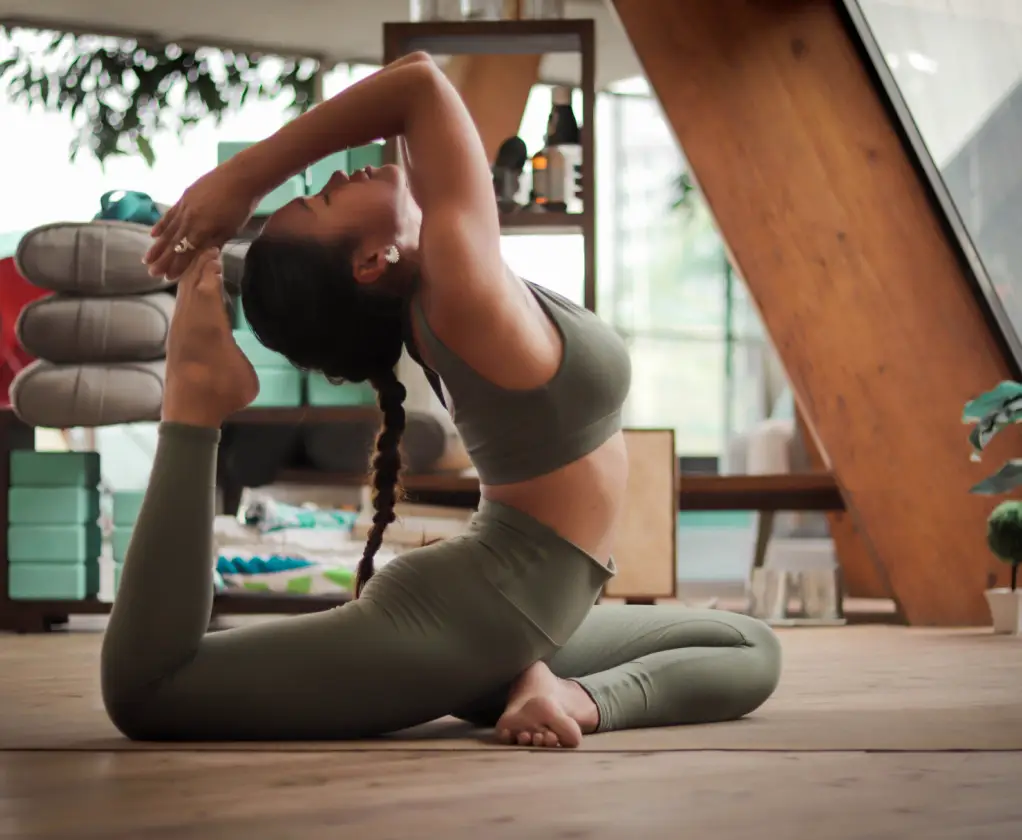
Before closing, the spine safely transitions in the opposite direction through backbends like Urdhva Dhanurasana (Wheel Pose) to counteract hours of forward folding. This leads directly into the calming finishing sequence featuring inversions like shoulder stands and headstands which reverses blood flow and calms the endocrine system. The practice finishes in deep, restful Savasana, allowing the body to integrate the energy generated.
Transitioning from the Half to Full Primary
For many practitioners, building up to all 42 postures happens in stages. Beginning with an ashtanga half primary series pdf routine allows students to build the necessary shoulder stability, core strength, and breath capacity safely. Once the half series becomes a sustainable, fluent daily habit, practitioners gradually incorporate the closing seated postures, expanding safely into the full 42-pose sequence without burnout or injury.
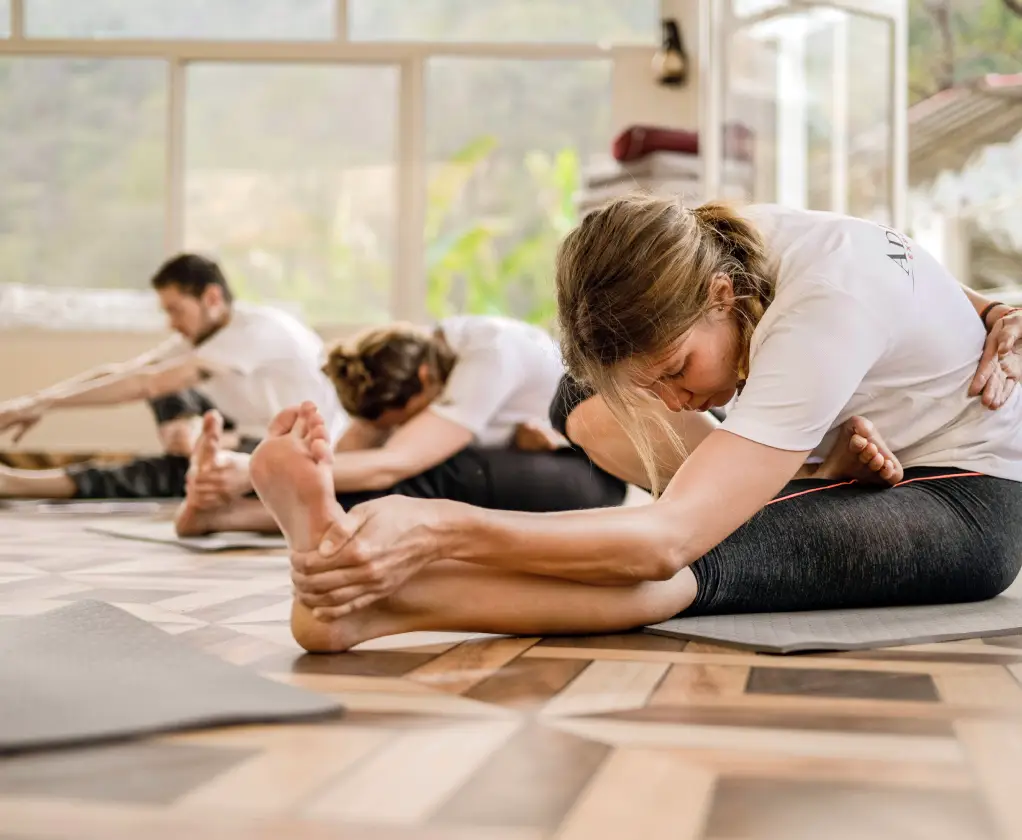
Build flexibility and explore seated forward folds with patience and proper alignment.Progress gradually into deeper backbends as mobility, strength, and body awareness improve.
ALIGNMENT & MODIFICATIONS
Why Blocks & Straps Are Essential for Safety
A common misconception in purist Ashtanga circles is that using props somehow dilutes or violates traditional practice. However, forcing a body into rigid postures without proper structural readiness leads to strain, compensation, and long-term joint pain. Incorporating blocks and straps is not a compromise of tradition but it is a smart, anatomy-based approach to keeping the practice safe and effective.
The Modern Body Reality
Traditional Ashtanga was developed for young students who lived active, floor-seated daily lives. In contrast, modern practitioners spend hours sitting at desks, driving, and looking at screens. This sedentary lifestyle leads to chronically tight hip flexors, weak glutes, and shortened hamstrings. Forcing a desk-bound body straight into deep forward folds creates severe lumbar compression, straining the lower back instead of lengthening the hamstrings.
How to Use Straps for Spinal Health
In deep seated forward folds like Paschimottanasana, reaching for the feet prematurely often causes rounding of the thoracic spine and collapses the chest.
Loop a yoga strap around the balls of your feet while keeping your arms straight and shoulders pulled down your back.
Focus on maintaining a long, uncompressed spine and an open heart space.
Allow the hamstrings to open gradually through consistent breath rather than pulling forcibly with arms.
A visual guide to the Ashtanga Vinyasa Primary Series
How to Use Blocks for Joint Protection
Blocks serve as indispensable tools to bring the floor closer to you, preserving biomechanical integrity across standing and seated postures:
In Standing Postures (Trikonasana, Parsvakonasana): Placing a block under the bottom hand keeps the side body long and prevents rounding in the ribs or dumping weight into the front knee.
In Seated Postures (Marichyasana variations, Janu Sirsasana): Sitting on the edge of a block tilts the pelvis forward, taking pressure off tight hip joints and allowing the spine to extend naturally upward.
Reframing the Ego
Using modifications is never "cheating" or a sign of weak practice, instead it is a hallmark of high body awareness and intelligent movement. Meeting your body where it is today honors the true spirit of Yoga Chikitsa (healing therapy). Props allow you to maintain proper alignment, keep the breath fluid, and cultivate a daily practice that remains sustainable for decades.
Free Resource Download
Download the Ashtanga Primary Series Cheat Sheet (PDF)
Never forget your sequence or drishti points during home practice. Download our high-resolution, printable chart including pose sequences, breath counts, and safe half-primary modifications.
The Ashtanga Vinyasa Primary Series is far more than a rigid physical sequence or an advanced fitness milestone. At its core, Yoga Chikitsa is an invitation to turn inward, clear away the clutter of modern stress, and cultivate a steady, resilient nervous system. By honoring the rhythm of the Tristana method—linking breath, bandhas, and drishti you transform your daily practice from a mechanical routine into a moving meditation.
True progress in Ashtanga is measured by inner quietude rather than physical acrobatics. Approach your practice with patience, respect your body's individual boundaries, and let the healing architecture of the primary series support your growth for years to come.
Explore our complete curriculum, review upcoming 200 Hour Yoga Teacher Training In Rishikesh, batch dates or speak directly with our admissions team to plan your arrival in Rishikesh.
What is the primary purpose of the Ashtanga Vinyasa Primary Series?
The Primary Series is traditionally known as Yoga Chikitsa or Yoga Therapy. Its core purpose is to purify the physical body, realign the spine, and calm the nervous system rather than act as an extreme athletic fitness test.
How many postures are in the full Primary Series?
The full sequence comprises 42 traditional postures, beginning with Sun Salutations, moving through a grounded standing sequence and a therapeutic seated core, and concluding with backbends and a structured finishing sequence.
Can beginners practice the Half Primary Series?
Yes. Starting with a half-series offers a safe, sustainable way to build core strength, shoulder stability, and breathing capacity before expanding into the full 42-pose sequence.
Are props like blocks and straps allowed in traditional Ashtanga?
Using props is a practical, anatomy-driven approach to protect the lower back and accommodate modern tight hips or hamstrings without compromising traditional lineage principles.
How often should beginners practice the Primary Series?
Traditionally, Ashtanga is practiced six days a week with rest days on moon days and Saturdays. For modern beginners, establishing a sustainable routine of 3 to 4 days a week allows the body adequate time to recover and adapt.
Where can I find a downloadable guide for home practice?
Beginners often benefit from using a printable reference guide, such as an Ashtanga Primary Series cheat sheet or a half-primary progression PDF, to help memorize pose sequences, breath counts, and gaze points.
Born and raised in Rishikesh, Yogi Ankit Joshi Ji is an E-RYT 500 yoga master with a degree in Yogic Sciences and over a decade of teaching experience. He specializes in classical Hatha alignment, Ashtanga Vinyasa, and functional anatomy, having mentored over 3,000 certified graduates worldwide.