Special fees available on our 200, 300 and 500 hour Yoga Teacher Training courses.
Ancient Hand Gestures for Modern World
5 Yoga Mudras for Better Sleep and Natural Insomnia Relief
Are you tired of not being able to sleep as your brain won’t stop going? Learn how using some simple hand movements called yoga mudras for sleep can help anchor your nervous system so you can relax and get a goodnight’s sleep.
TBy Tejendra Ji••Calculating...
Simple hand gestures like Shakti Mudra act as gentle neural anchors to release evening tension and ease sleeplessness naturally.
It is 2:30 AM, and you are staring at the ceiling. Your body is completely exhausted from a long day, yet your mind refuses to power down-looping through work stress, tomorrow's unmade to-do lists, and scattered thoughts. If you know this frustrating "tired-but-wired" cycle, you have likely already experimented with blackout curtains, herbal teas, or sleep-tracking apps without lasting relief.
When searching for sustainable ways to quiet the mind at night, most people overlook the subtle somatic self-regulation tools built directly into ancient yogic traditions. Moving away from heavy sleep aids or late night screen scrolling, practicing yoga mudras for sleep offers a gentle, drug-free alternative. A targeted sleep mudra acts as an energetic neural anchor right in your hands. Through conscious, effortless finger placements (Hasta Mudras), you send direct sensory feedback to the brainstem, triggering the parasympathetic nervous system and establishing a reliable pre-sleep cue.
Subtle Energy Pathways
The Science of Mudras and Nervous System Regulation
In classical Ayurvedic philosophy, the human body is a microcosm of nature's five foundational elements, and each finger acts as an energetic circuit terminal. The thumb represents Fire (Agni), the index finger channels Air (Vayu), the middle finger connects to Ether or space (Akasha), the ring finger embodies Earth (Prithvi), and the little finger governs Water (Jala). When excessive mental stimulation aggravates the mobile Air and Ether elements creating anxiety, restlessness, and scattered thoughts joining specific fingertips helps steady and rebalance that internal energy.
From a physiological perspective, our fingertips are packed with dense sensory nerve endings. Holding gentle, sustained pressure in a hand gesture stimulates neural pathways linked to the vagus nerve, your body’s primary relaxation highway. This somatic feedback slows your heart rate, eases shallow chest breathing, and helps shift brainwave activity down from alert, high-frequency beta waves into calm, restorative theta states. Integrating a dedicated mudra for sleeplessness into your evening wind-down transforms simple stillness into an active physiological cue, signaling deep safety to your nervous system so sleep can arrive naturally.
Quick Reference Guide
Symptom to Mudra Matrix for Nighttime Rest
Not every sleepless night stems from the same root cause. Sometimes your body feels heavy while your thoughts spiral at full speed; other nights, physical tension in your chest or shallow breathing keeps you hovering just above deep sleep. Because each hand gesture channels distinct elemental qualities, matching your specific nighttime challenge to the right mudra makes your bedtime practice far more effective.
Use the reference guide below to identify which yoga mudras for sleep align with what you are experiencing tonight. Whether you need a grounding mudra for sleeping right in bed or a gentle gesture to release trapped upper-body stress before lying down, this matrix pairs your symptoms with recommended hold times and postures so you can settle into rest without guesswork.
Nighttime Symptom / Challenge
Primary Mudra
Corresponding Element
Recommended Hold Time & Posture
Target Benefit
Racing Thoughts / Overthinking
Gyan Mudra (Gesture of Knowledge)
Air & Universal Consciousness
10-15 mins; seated or lying in Savasana
Quiets repetitive mental loops and anchors focus.
Chest Tightness / Shallow Breathing
Apan Vayu Mudra (Heart Calming Gesture)
Earth & Air
10-12 mins; comfortable seated position
Releases physical tension held in the upper torso and diaphragm.
Tired But Wired / Deep Restlessness
Shakti Mudra (Top Mudra for Sleeping)
Water & Pelvic Center
10-15 mins; resting on the lower belly
Slows breathing effortlessly and calms nervous system overstimulation.
Midnight Anxiety / Impatience
Shuni Mudra (Gesture of Patience)
Ether & Space
10 mins; palms facing upward on knees
Cultivates inner discipline and stabilizes erratic emotions.
Exhausted Waking / Low Vitality
Prana Mudra (Gesture of Life)
Earth & Water
10-15 mins; seated posture
Restores internal baseline energy and revitalizes the body.
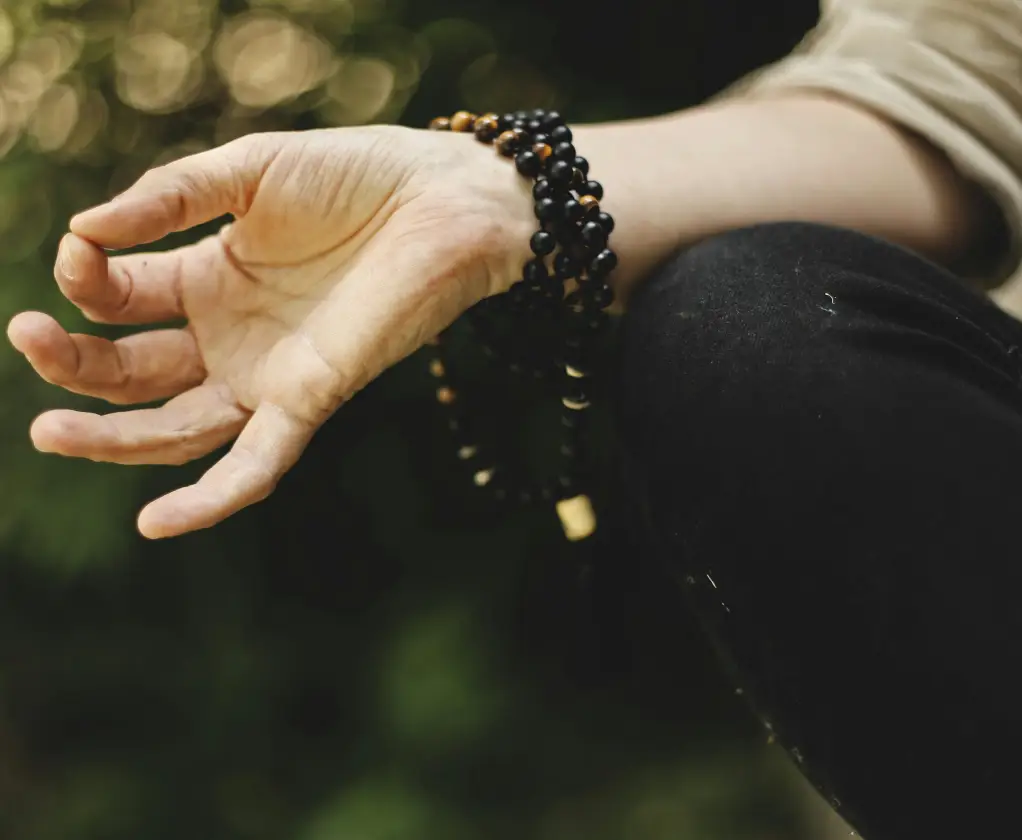
Close up of a hand wearing wooden mala beads resting on a knee in Gyan Mudra for nighttime relaxationJoining the ring and middle fingertips to the thumb helps restore depleted vital energy and release tension held in the chest.
Mudras Practice Guide
5 Yoga Mudras for Better Sleep and Deep Rest
1. Shakti Mudra (The Best Mudra for Sleep)
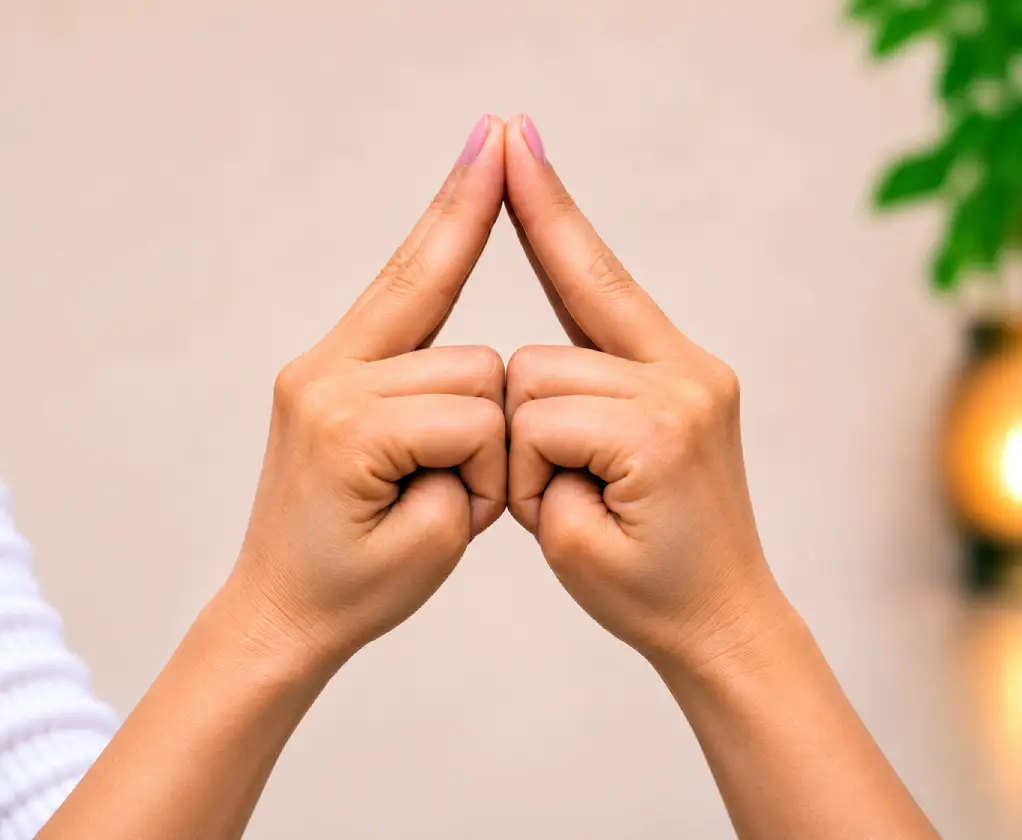
Widely regarded as the most potent shakti mudra for soothing anxiety-driven insomnia and physical agitation, this gesture directs breath and awareness downward into the pelvic basin. By drawing energy away from an overstimulated head and chest, it signals deep safety to the nervous system and dissolves chronic nighttime restlessness.
How to Perform
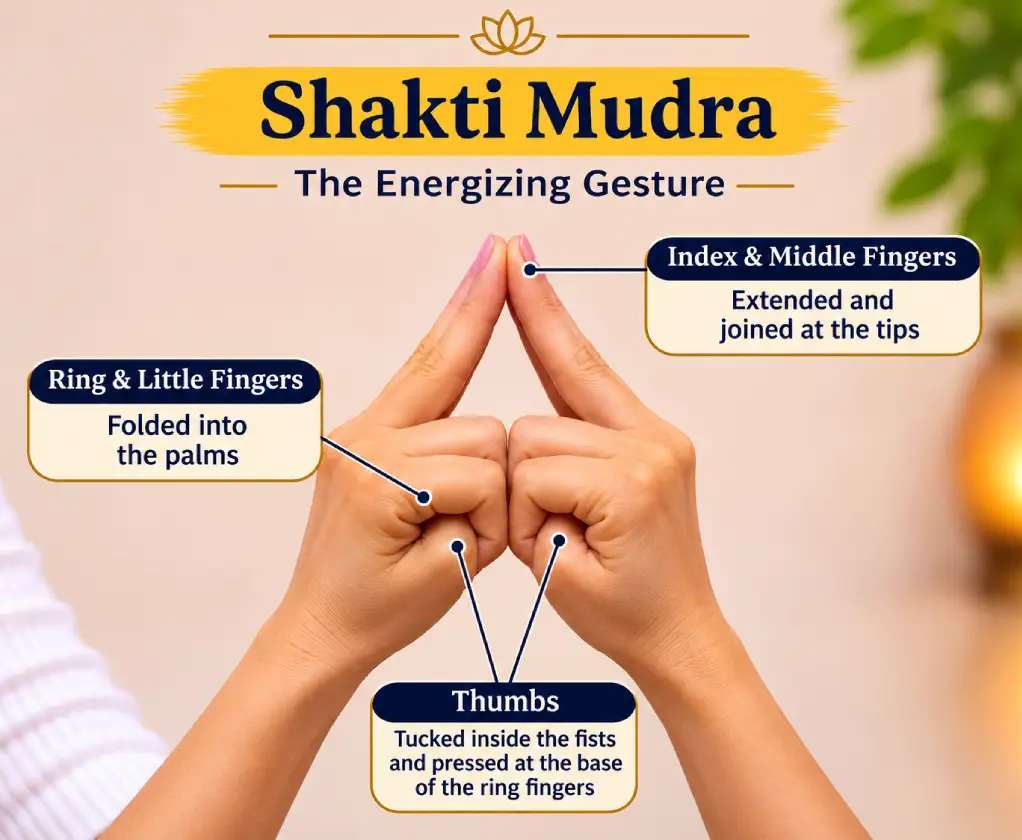
Fold both thumbs gently into the center of your palms.
Wrap your index and middle fingers loosely over your thumbs without squeezing.
Bring the tips of your ring fingers and little fingers together so they touch lightly.
Let the knuckles of your middle and index fingers rest against each other, then place your hands comfortably on your lower belly while lying in bed (Savasana). Hold for 10 to 15 minutes while breathing softly through your nose.
Labeled Shakti Mudra hand-position guide showing the index fingertips touching, middle, ring and little fingers folded inward, and thumbs gently holding the folded fingers.How to perform Shakti Mudra - An illustrated guide identifying the finger positions used to form this traditional yoga mudra.
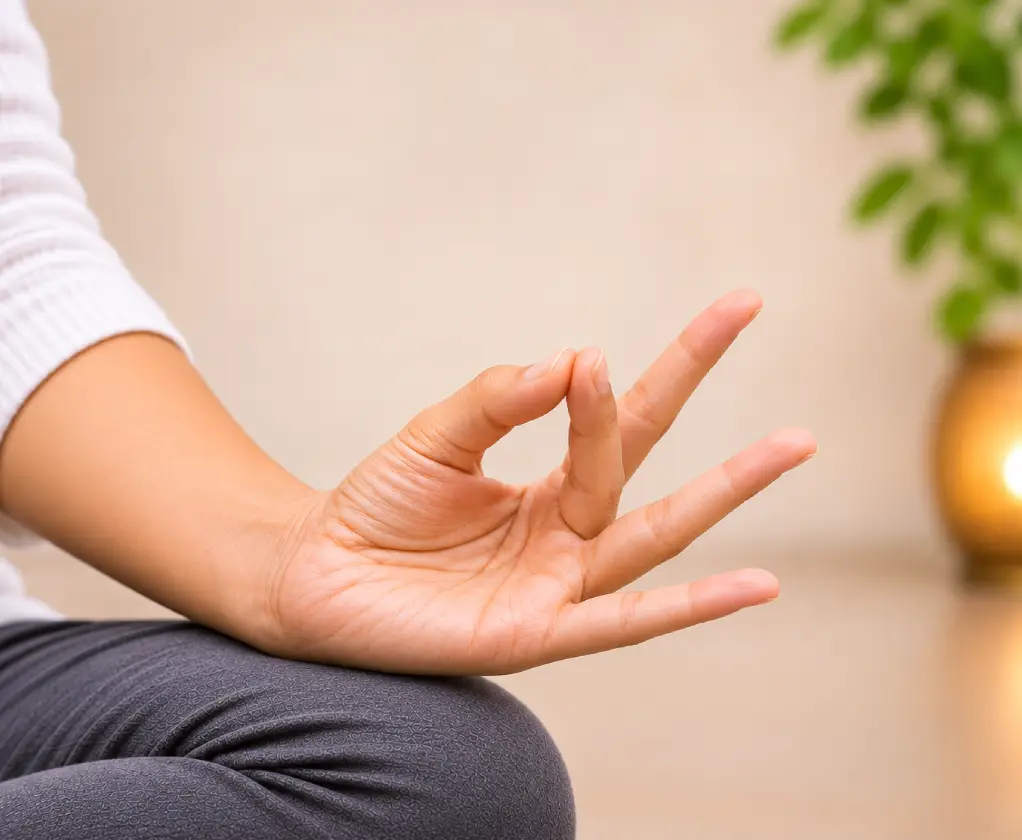
2. Gyan Mudra (The Mind-Quieting Gesture)
When midnight wakefulness is fueled by an overactive, analytical mind that refuses to switch off after a demanding day, gyan mudra acts as a steady mental anchor. Joining the Air and Fire elements stops repetitive thought loops and encourages brainwaves to settle into slower, sleep-ready rhythms.
How to Perform
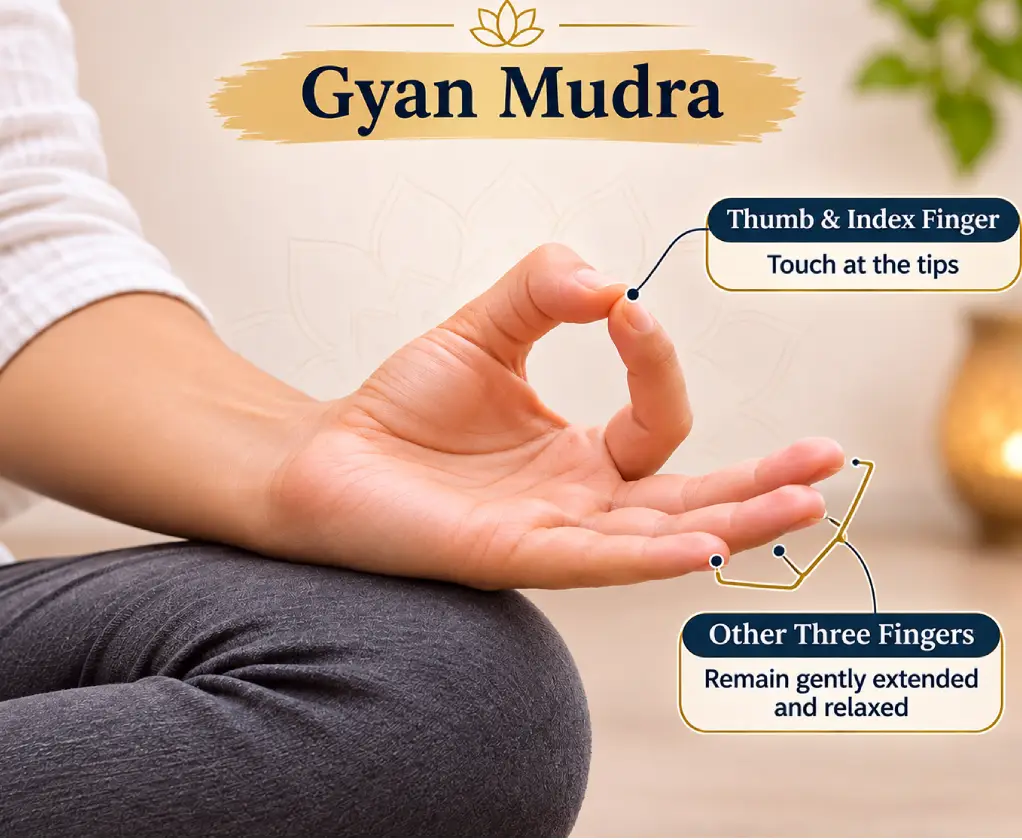
Gently touch the tip of your index finger to the tip of your thumb, forming a relaxed circle.
Keep your middle, ring, and little fingers extended naturally without stiffness.
Rest your hands palms-down on your thighs if seated, or beside your hips in bed to foster an inward, grounding focus for 10 to 15 minutes.
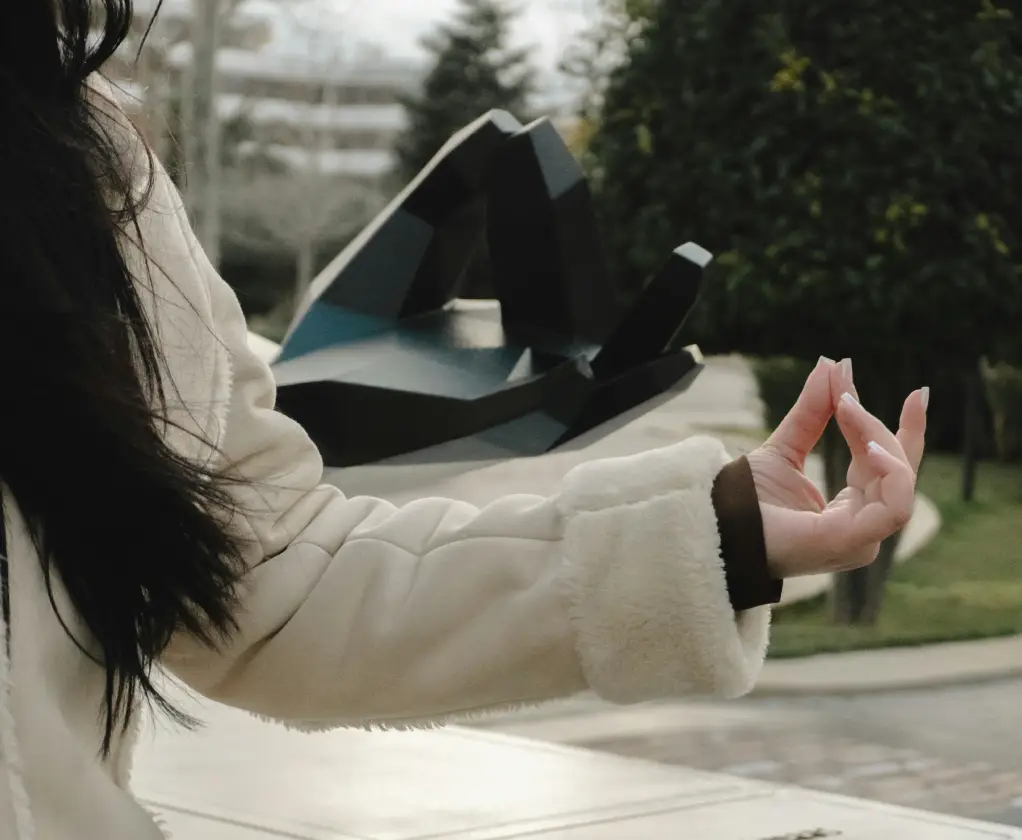
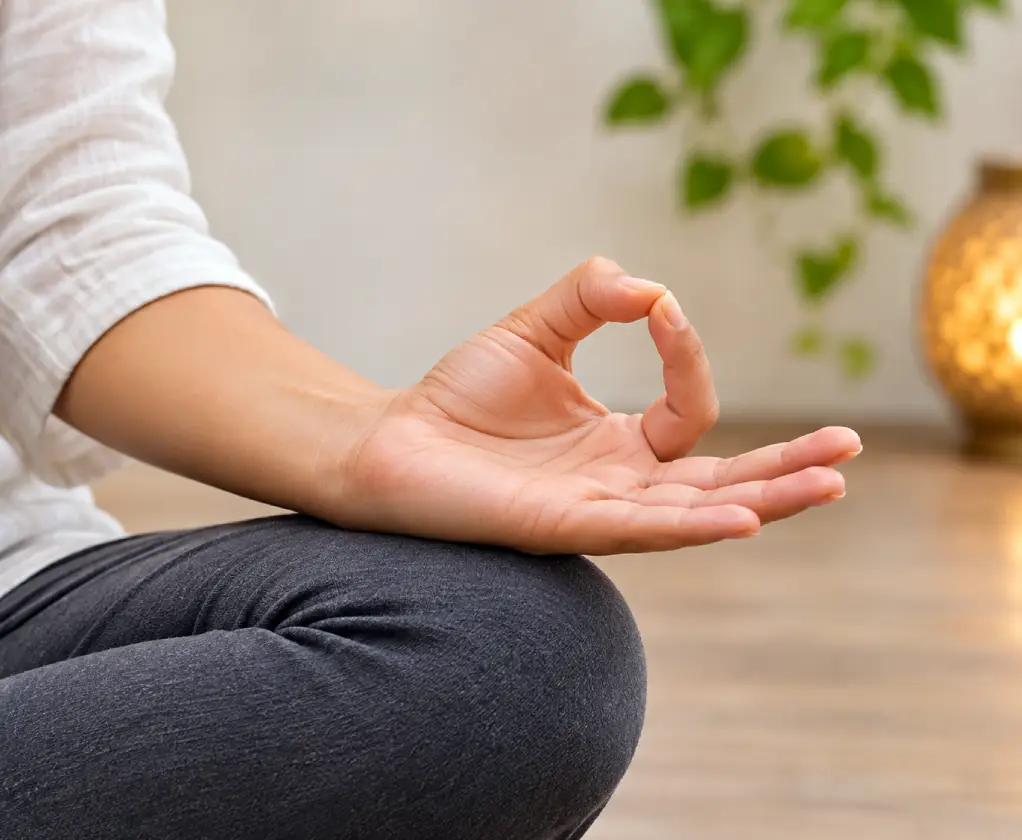
Gyan Mudra - A traditional yoga hand gesture commonly used during meditation, associated with focus, awareness, and mental clarity.How to perform Gyan Mudra - An illustrated guide showing the correct thumb and index finger connection and the relaxed position of the remaining fingers.
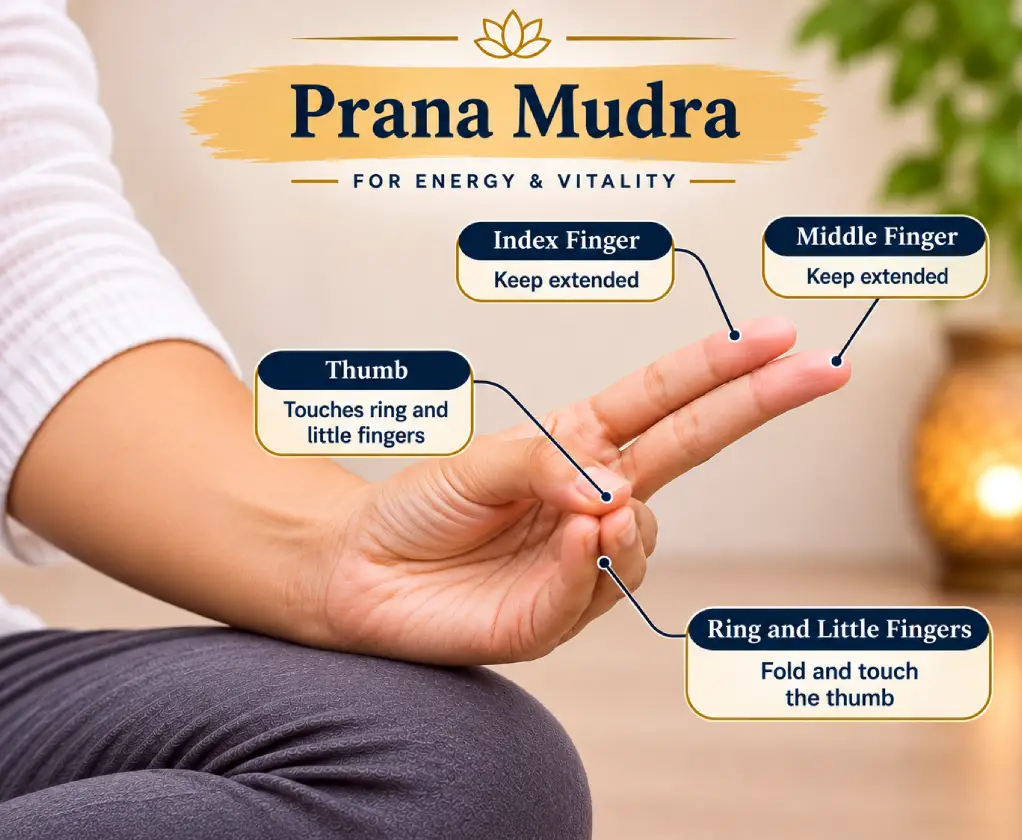
3. Prana Mudra (The Vital Energy Restorer)
Waking up exhausted despite spending a full night in bed often points to depleted or stagnant internal life force. Practicing this restorative deep sleep mudra balances the Earth and Water elements to clear energetic blockages, helping your body recharge efficiently overnight so you wake with steady baseline vitality.
How to Perform
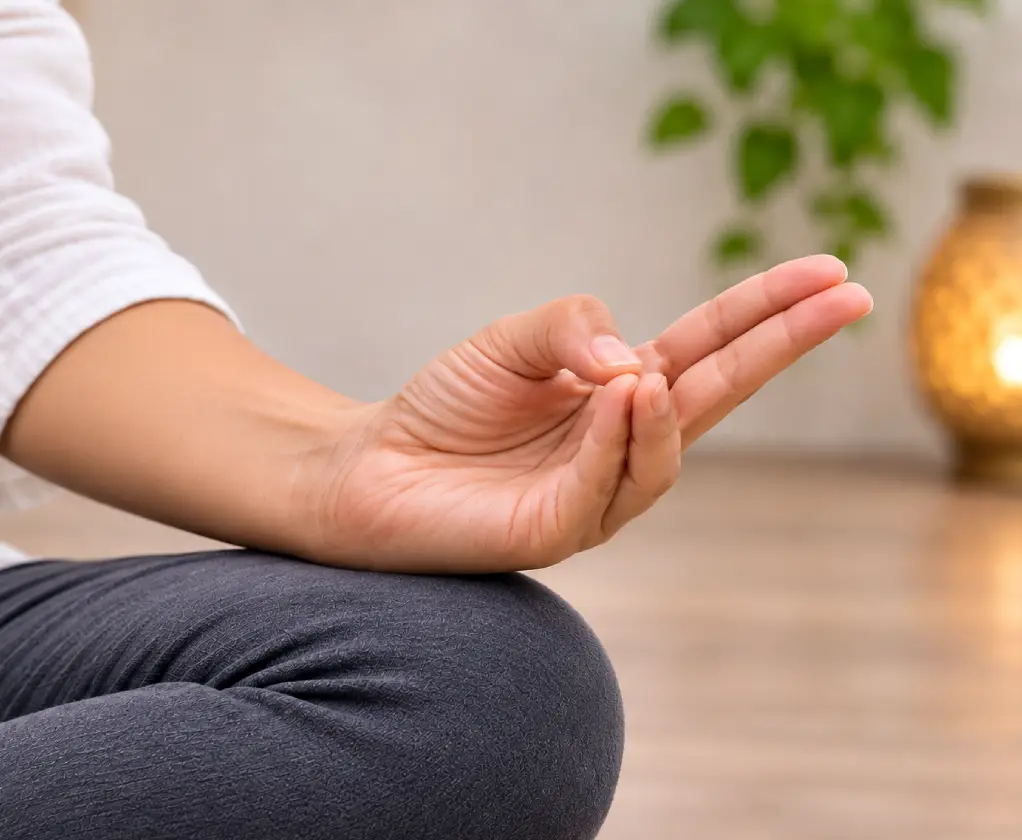
Bring the tips of your ring finger and little finger together to lightly touch the tip of your thumb.
Keep your index and middle fingers straight and relaxed.
Hold this position for 10 to 15 minutes before lying down, allowing your breath to lengthen naturally.
Prana Mudra - A traditional yoga hand gesture associated with vitality and energy, practiced with the thumb touching the ring and little fingertips.How to perform Prana Mudra - An illustrated guide to the finger positions used to form this traditional yoga hand gesture.
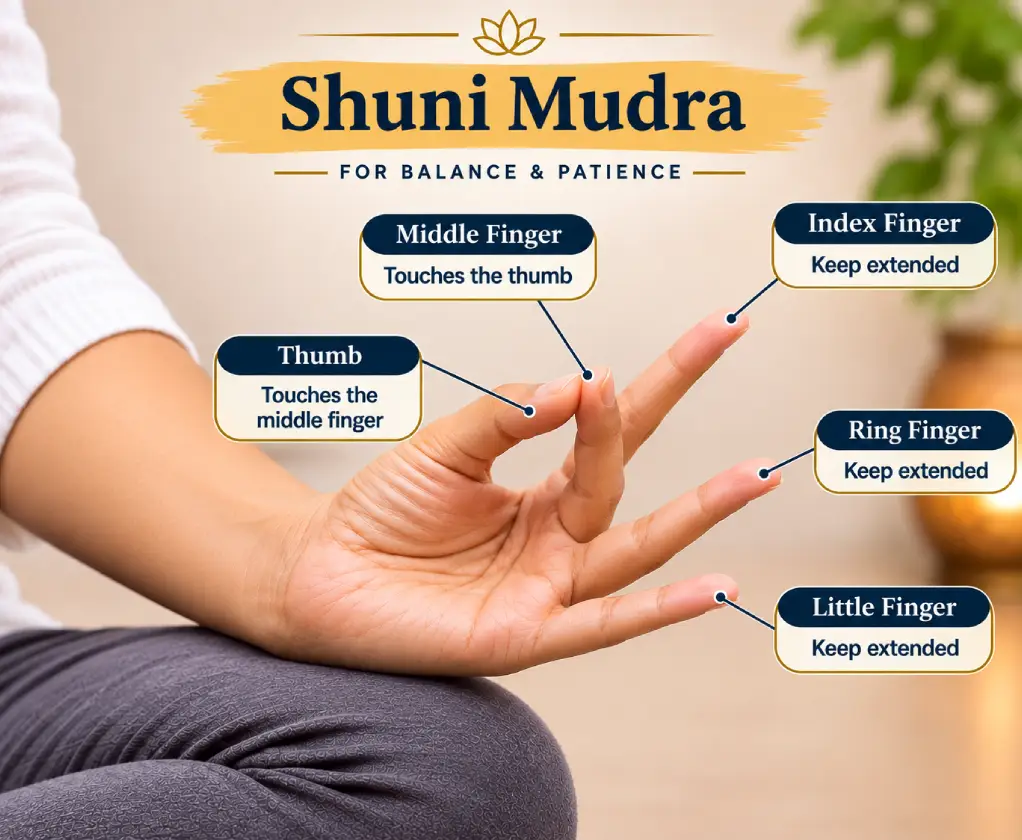
4. Shuni Mudra (The Patience and Stability Gesture)
Named after Saturn (Shuni), the traditional symbol of discipline and patience, this gesture grounds erratic emotional spikes and the frustration that builds when you stare at the clock at night. Connecting the thumb to the middle finger stabilizes the Ether element, creating spaciousness around anxious thoughts.
How to Perform
Touch the tip of your thumb lightly to the tip of your middle finger.
Keep your index, ring, and little fingers extended comfortably.
Rest your hands palms-up on your knees or beside your body for 10 minutes, softening your jaw and shoulders with each exhale.
Prana Mudra - A traditional yoga hand gesture associated with vitality and energy, practiced with the thumb touching the ring and little fingertips.How to perform Prana Mudra - An illustrated guide to the finger positions used to form this traditional yoga hand gesture.
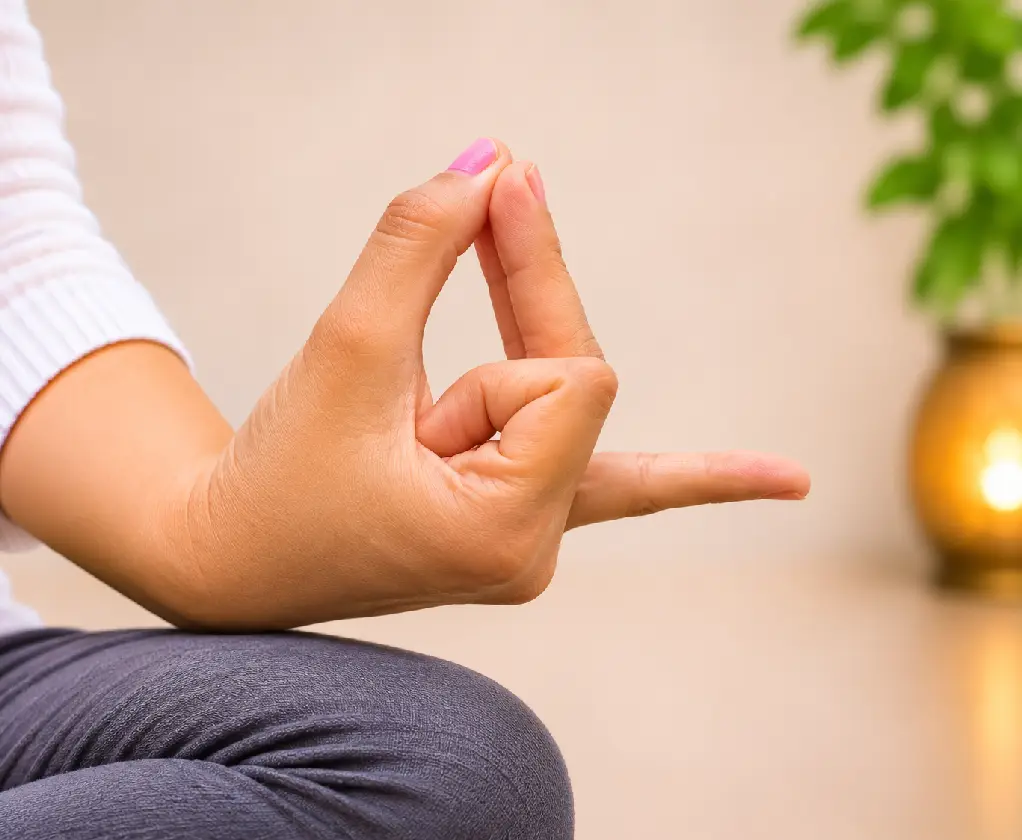
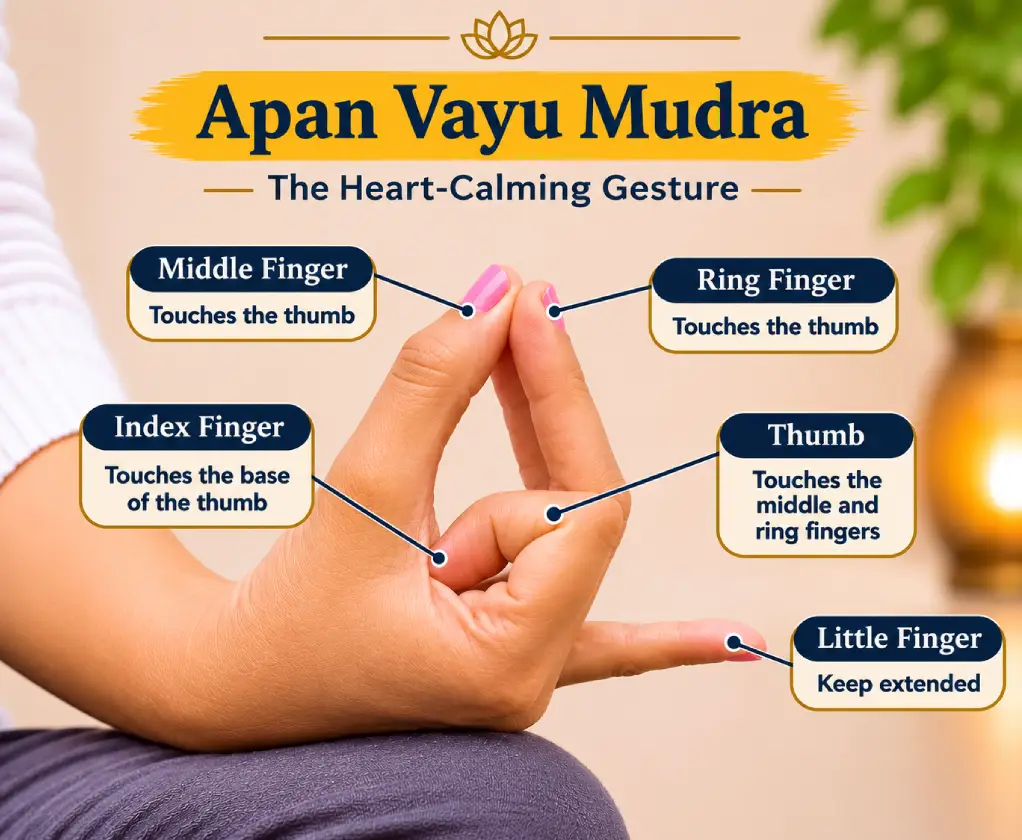
5. Apan Vayu Mudra (The Heart-Calming Gesture)
Evening stress frequently settles as physical tightness across the chest, a racing pulse, or shallow upper-lung breathing that blocks deep rest. Often called the heart-calming gesture, apan vayu mudra releases tension held around the diaphragm and invites slower, fuller respiration.
How to Perform
Fold your index finger inward so its tip rests gently at the base of your thumb.
Touch the tips of your middle and ring fingers to the tip of your thumb.
Keep your little finger extended straight and relaxed, holding the gesture for 10 to 12 minutes while seated comfortably before bed.
Prana Mudra - A traditional yoga hand gesture associated with vitality and energy, practiced with the thumb touching the ring and little fingertips.How to perform Prana Mudra - An illustrated guide to the finger positions used to form this traditional yoga hand gesture.
Nightly Wind Down Ritual
How to Build a 10-Minute Bedtime Mudra Routine
Practicing yoga mudras for sleep works best when woven into a predictable sensory ritual rather than treated as an emergency fix at 3:00 AM. Follow this simple three-step sequence right before bed to signal deep rest to your nervous system:
Environmental Setup: Dim harsh overhead lights and put away all screens at least 30 minutes before getting into bed. Lowering blue-light stimulation allows natural melatonin production to rise while reducing visual input for your brain to process.
Posture Integration: Lie flat on your back in Savasana with a pillow supporting your knees, or rest comfortably against your headboard. Relax your shoulders away from your ears so your arms feel completely heavy against the mattress.
Environmental Setup: Form your chosen sleep mudra with feather-light finger pressure and pair it with slow nasal breathing. Inhale softly for a count of four, then extend your exhale to six or eight counts to engage your vagal brake and drift tow
Sustaining Restful Habits
Embracing Subtle Care for Lasting Sleep
Overcoming persistent sleep disturbances rarely happens through force or willpower; it begins when you treat your nervous system with gentle, consistent care. Integrating a dedicated mudra for sleeping into your nightly routine offers a quiet somatic anchor that calms an overactive mind and restores natural rhythm without strain.
While practicing a sleep mudra at home provides immediate evening relief, exploring the full depth of yogic subtle anatomy, pranayama, and traditional somatic sciences requires authentic guidance. For practitioners ready to move beyond casual routines and study classical Hatha and Ashtanga lineages in their birthplace, immersive residential programs at 8 Limbs Yoga School in Rishikesh offer structured training rooted in ancient wisdom.
Explore our complete curriculum, review upcoming 200 Hour Yoga Teacher Training In Rishikesh, batch dates or speak directly with our admissions team to plan your arrival in Rishikesh.
Shakti Mudra is widely considered the most effective mudra for sleeping when you feel tired-but-wired or physically restless. By folding the thumbs into the palms and resting the hands on the lower belly in Savasana, it directs breath downward into the pelvic basin and signals deep calm to the nervous system within 10 to 15 minutes.
How long should you hold a sleep mudra before bed?
Most yoga mudras for sleep should be held for 10 to 15 minutes during your evening wind-down routine. Applying feather-light pressure without tensing your fingers allows sensory nerve endings in the fingertips to stimulate the vagus nerve and gradually shift brainwaves into restful states.
Can I practice yoga mudras while lying down in bed?
Yes, you can practice almost any sleep mudra while lying flat on your back in Savasana or propped up comfortably against pillows. Practicing in bed removes the effort of maintaining upright posture, allowing your shoulders, jaw, and hands to soften completely as you drift off.
Which mudra helps stop overthinking and racing thoughts at night?
Gyan Mudra (touching the tip of the index finger to the tip of the thumb) is the ideal mudra for sleeplessness caused by repetitive mental loops and analytical overthinking. This simple gesture balances the Air and Fire elements, anchoring scattered thoughts and quieting mental chatter before sleep.
Do yoga mudras really work for natural insomnia relief?
Yoga mudras support natural insomnia relief by acting as somatic neural anchors rather than quick sedatives. Gentle, sustained fingertip contact combined with slow nasal exhalations engages the parasympathetic nervous system, lowers heart rate, and conditions your body to recognize a reliable pre-sleep cue over time.
Should I practice sleep mudras with one hand or both hands?
Practicing with both hands simultaneously creates symmetrical sensory feedback across both sides of the body, which deepens nervous system relaxation. However, if one hand is resting comfortably under a pillow or holding a blanket, practicing with a single hand still delivers gentle calming benefits.
Tejendra Panwar is a yoga teacher based in Rishikesh with experience in group classes, private sessions, retreats and yoga teacher training. His background combines formal yoga education with practical teaching across different student levels.